Turnkey
Turnkey engineering and complete installations
Studies, drawings, advice and technical support. Plants designed for operations, safety, performance and cost.
Turnkey
Studies, drawings, advice and technical support. Plants designed for operations, safety, performance and cost.
EELIX designs installations as a whole: day-to-day operation, environmental and safety rules, technical performance and the client’s cost.
From the early study to handover, the experience comes from several hundred plants already delivered. The commitment is a plant that can be operated safely.
During engineering, the methods account for the real life of the plant, not only the process diagram.

DENOX, dilution, air treatment, polymers or access: the scope follows the fluid, the flow and the site. Engineering starts from the real liquid — concentration, temperature, flow — then sets the layout, materials and access.
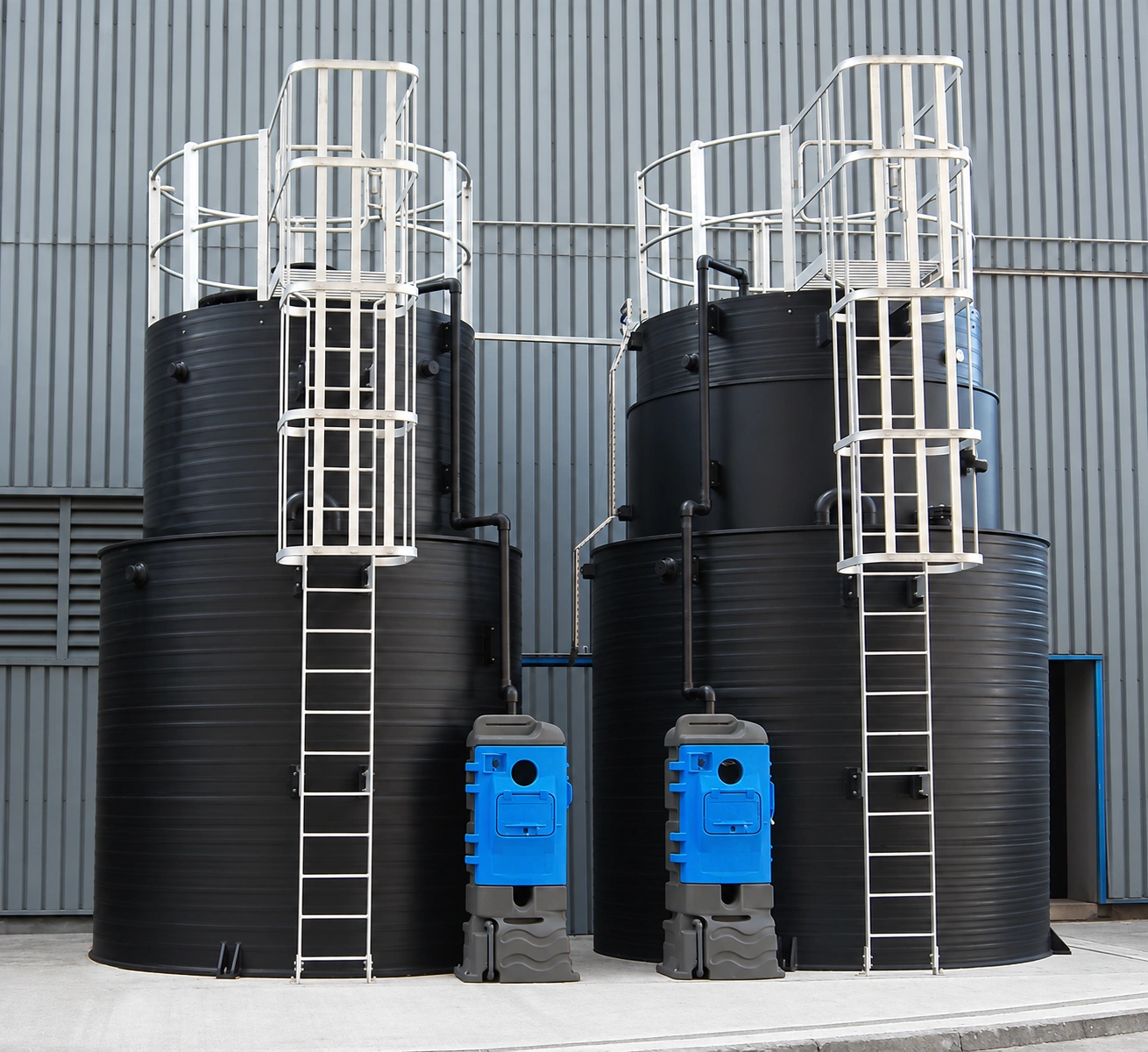
A turnkey installation links storage, unloading, dosing and commissioning. Tanks, skids and pipework leave the EELIX workshops, then connect on site with operator training.

Nitrogen oxides form in high-temperature combustion: nitrogen and oxygen in the air produce nitric oxide (NO) and nitrogen dioxide (NO₂). Boilers, engines, furnaces, cement kilns and incinerators are all concerned. Emission limits apply across industry.
Two levers matter: combustion conditions, and a flue-gas treatment dedicated to this parameter. The non-catalytic process (SNCR) reduces NOx between 900 and 1,200 °C. A typical reductant rate is 1 to 1.5 mol of NH₃ per mol of NOx, or 0.5 to 0.75 mol of urea per mol of NOx.
Since 2005, EELIX has built autonomous systems from 100 to 2,000 L/h. More than 30 SNCR plants have been delivered: cement, incinerators (Chartres, Lyon, Grenoble), TOTAL, Saint-Gobain, in France and across Europe. 32.5% urea storage in HDPE tanks, a pump skid ready to connect, from the early study to commissioning.

Urea is the reductant in SCR and SNCR plants: cement, incineration, glass, petrochemicals. For vehicles, the same chemistry is known as AdBlue®. Liquid urea is made industrially, either by dissolving solid granules (prills) in demineralised water, or by mixing synthetic urea with that water.
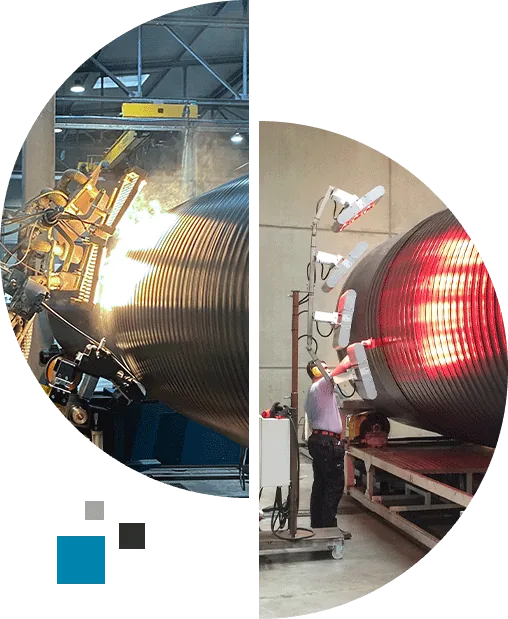
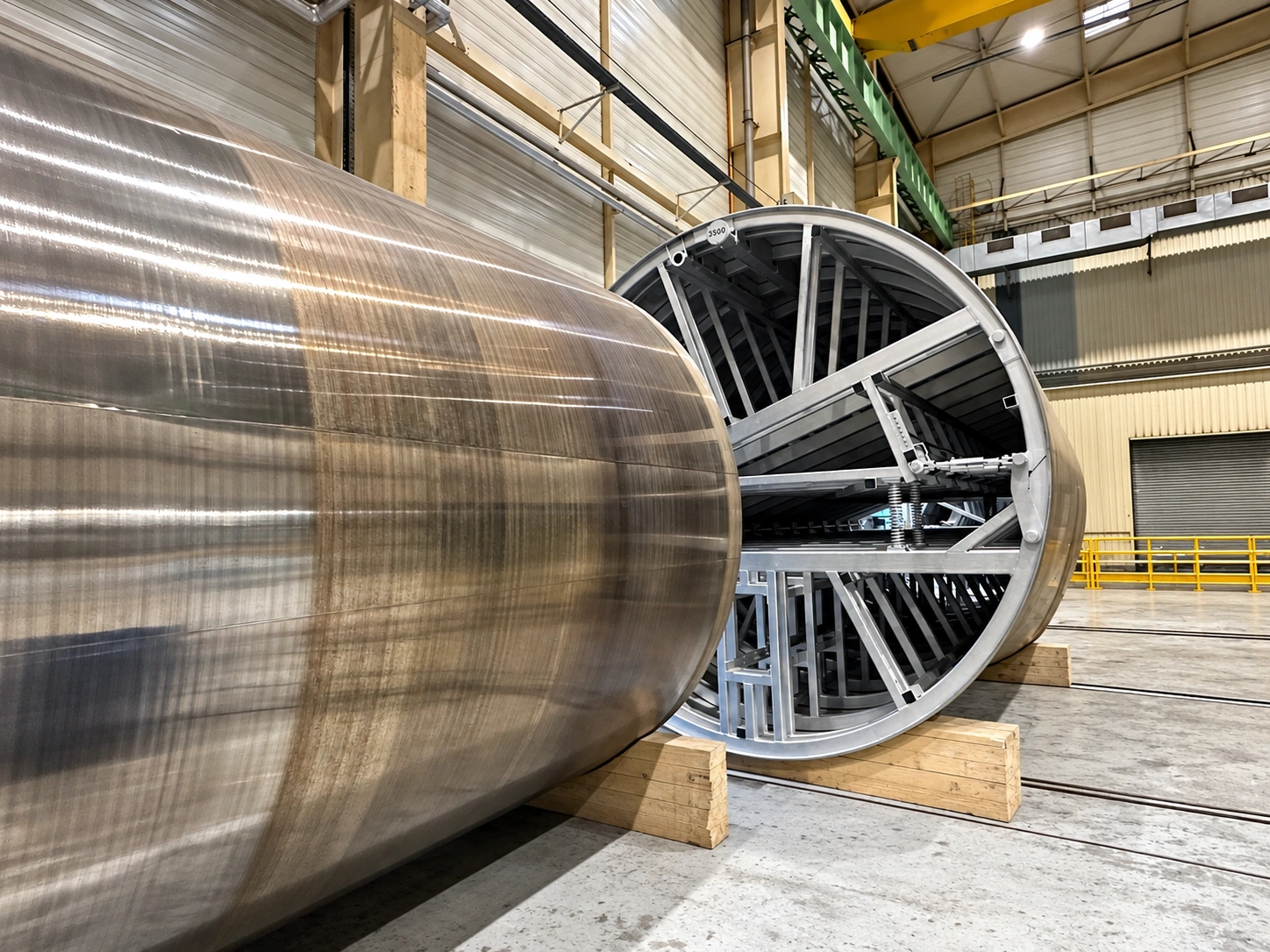
Units combine with extrusion-wound HDPE tanks, for the concentrate and the diluted product. No metallic contamination, no product breakdown. The temperature drop on dilution is controlled so the mix stays warm enough for continuous operation.
Temperature sensors feed the control system. On alarm, a shutdown sequence secures the plant.

Acid dilution units combine with spiral-wound thermoplastic tanks: concentrate and diluted product in stable vessels, without metallic contamination. A project can include management, installation, commissioning and training.
From 96 or 98% sulphuric acid, solutions run from 5 to 80%. Mix temperature is held at 25 or 30 °C by a thermoplastic exchanger built into the dilution tank, cooling the acid continuously before transfer to storage.

Around some industrial sites or wastewater plants, a compliant installation can still release nuisance odours. Calcium nitrate injected into the sewer network stops fermentation and therefore the formation of odorous compounds, including H₂S.
EELIX supplies the HDPE tanks, unloading stations and dosing cabinets for this treatment. The reagent is stored and injected without corroding the equipment.

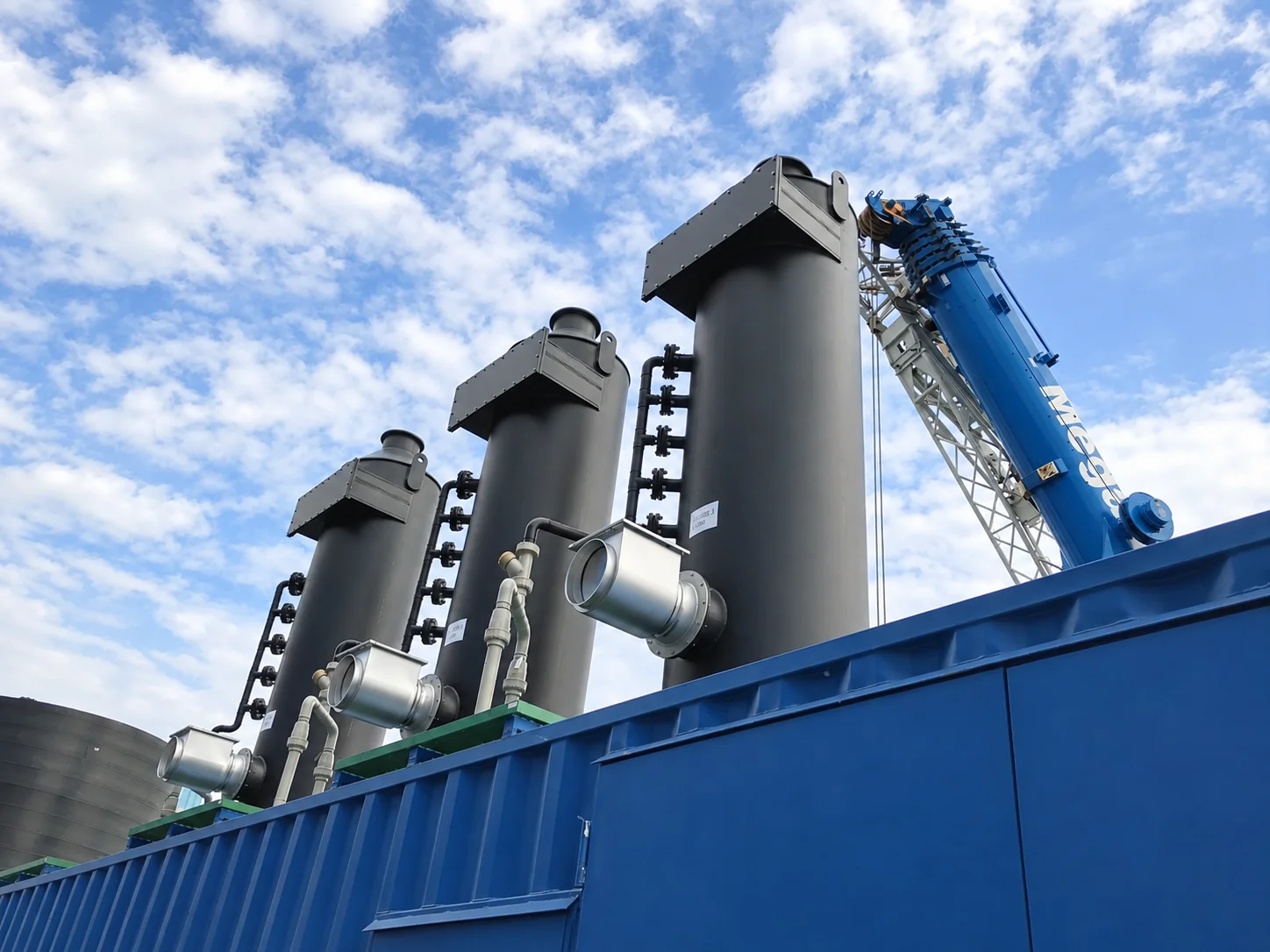
Scrubbing dissolves a pollutant gas into a liquid: water, or water with a neutralising reagent. The process is used for natural gas, petroleum gas recovery, chemicals, metals and power. For tank vents as for forced ventilation, the scrubber is chosen with the gas, the flow and the discharge limit.
Contaminated gas passes separators, filters, coalescers and dryers. Units are designed to order, including for high temperatures. Four reasons come back: limit impact on air and water, protect operators and plant, obtain a process-quality gas, and extend equipment life by cutting maintenance.
Polygroup® prepares polymers automatically from emulsion or powder. For water and sludge treatment, the balance of performance, footprint and ergonomics matters as much as separation yield.
Three versions: SE for emulsion polymers, SP for powder, SX combined for emulsion and powder. Paired with mechanical solid-liquid separation, they raise the yield.
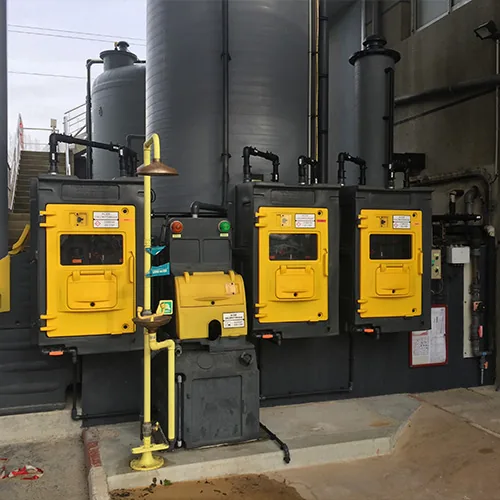
On a turnkey project or an existing plant, access and circulation in the storage area are calculated by engineering, assembled in the workshop, then erected on site if required.
In corrosive atmospheres, structures use pultruded glass-reinforced polyester profiles and polyester-resin grating. A 19 × 19 square mesh meets the 20 mm ball standard.

Engineers start from the site: fluid, flow, footprint, access, standards. Deliverables cover design, drawings, P&IDs and functional analyses, then construction, installation and commissioning of tanks, silos, bulk storage and associated equipment.
Maintenance and repair extend plant life. Typical sectors: chemicals, food, petroleum products, speciality chemicals, food-grade liquids and pharmaceuticals.
Request a quote