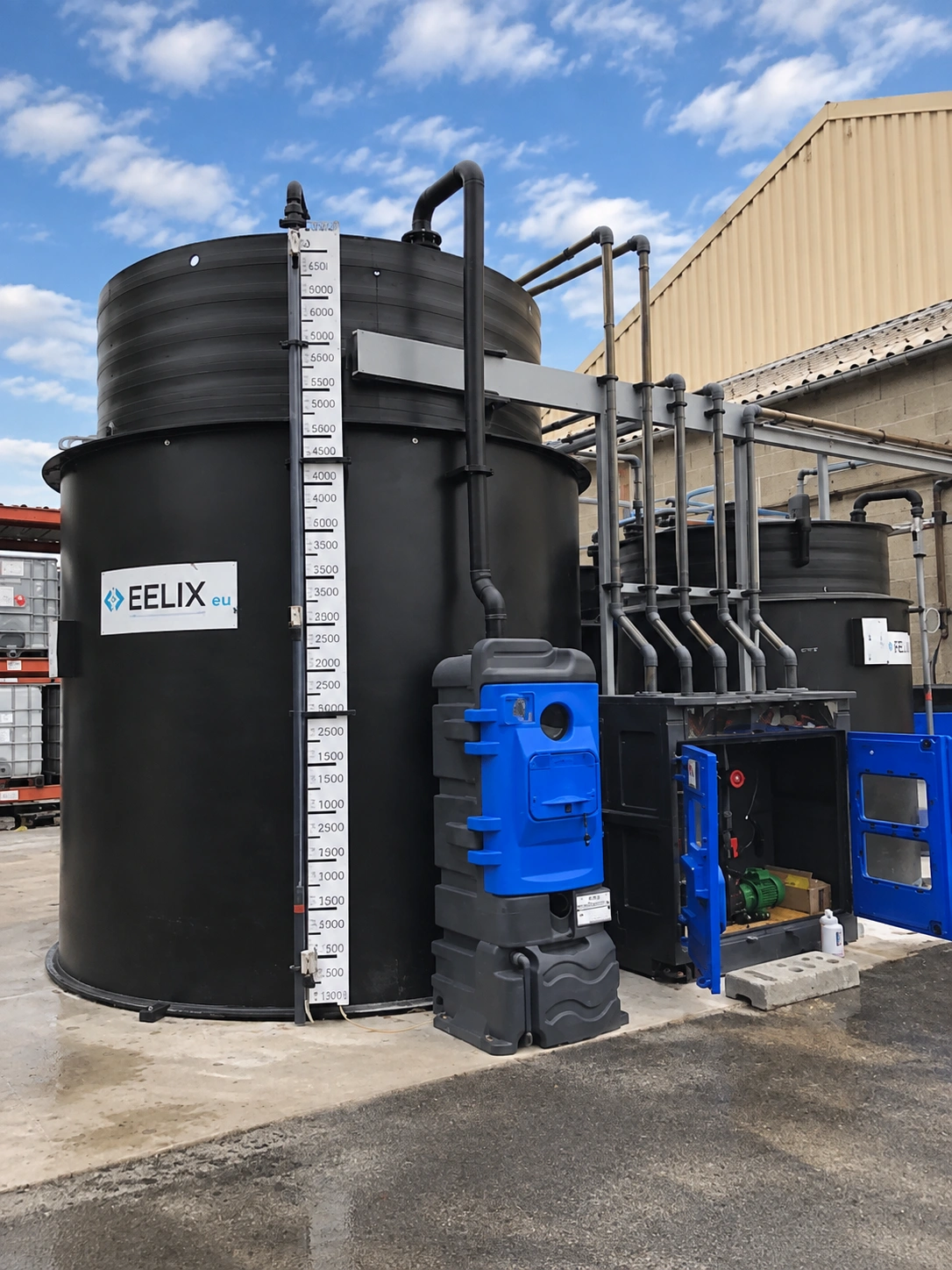
Double wall
Double-wall HDPE tanks
Second skin and leak detection for chemicals, corrosive or polluting liquids. Built and installed by EELIX.
Double wall
Second skin and leak detection for chemicals, corrosive or polluting liquids. Built and installed by EELIX.
For acids, fuels, fertilisers and polluting liquids, the double wall retains any leak. A detector signals liquid in the interstitial space.
Unlike metal, thermoplastic resists the effects of chemicals. Dimensions, wall thickness and fittings follow the duty.
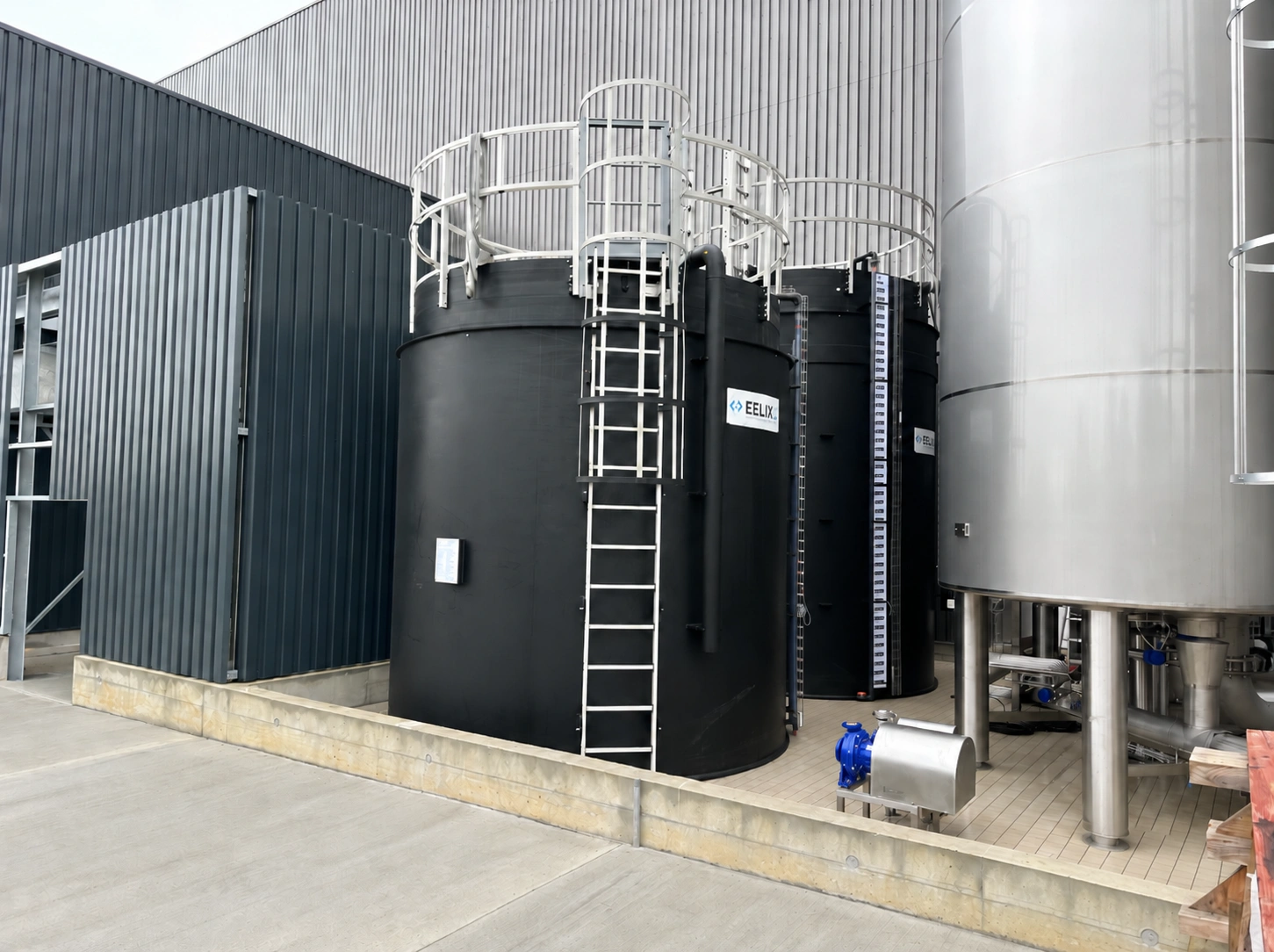
The tank stands where the process needs it: as an island, beside a bund already on site, or alone on a slab. The second skin is the containment. There is no masonry wall around it, and no footprint lost to a pit.
Two vessels can sit side by side, with the manifold and the nozzles between the shells. Diameter and height follow the volume, the fluid density and the ground available. Anchors, wind load and UV resistance are part of the sizing.
The ladder and the manway stay clear of the wall and of the aisle. Filling, emptying and routine checks happen without blocking the way around the tank.
Because the bund is inside the outer skin, the vessel can sit closer to the building than a single-wall tank plus a separate pit, which would eat the passage. Nozzles face the process, not the crew route.
Headroom, room for the crew and the tie-in to pipework already in place decide where the tank stands. It takes the space the building leaves, not the other way round.
Under a walkway, top access — manway, vent, upper nozzles — is from the platform, without a separate tower. The working height is the height of the hall.
Both shells stay reachable all the way round. The ladder, the lift and the connections at the base do not get in each other’s way. The overhead platform takes the checks at the top, and the floor of the hall stays clear for circulation and for the pipework already running through the building.
The gap between the two skins is not unused volume. That is where the leak detector or the sight glass reports liquid, before it can reach the outside. The alarm is raised on the interstitial space, while the product is still held by the outer wall.
HDPE does not corrode in contact with acids, bases, fuels or fertilisers. The second skin is the bund, where a metal wall would eventually give way. Wall thickness, nozzle layout and the detector are set from the fluid and from the site drawing.
A vertical tank with top access, a row of vessels or a single unit: fabrication follows the fluid, the capacity and the installation drawing. The photographs below are EELIX builds, not one standard model.
Buryable tanks store water, process water, effluents or other compatible fluids. They combine heat resistance, corrosion resistance and a controlled cost.
They secure the storage, protect it from weather and free up ground area. The shape can follow the site — industrial, food or municipal.
For sensitive products they must meet containment, leak-detection and environmental rules. EELIX sizes and builds to the quality and safety standards of the project.