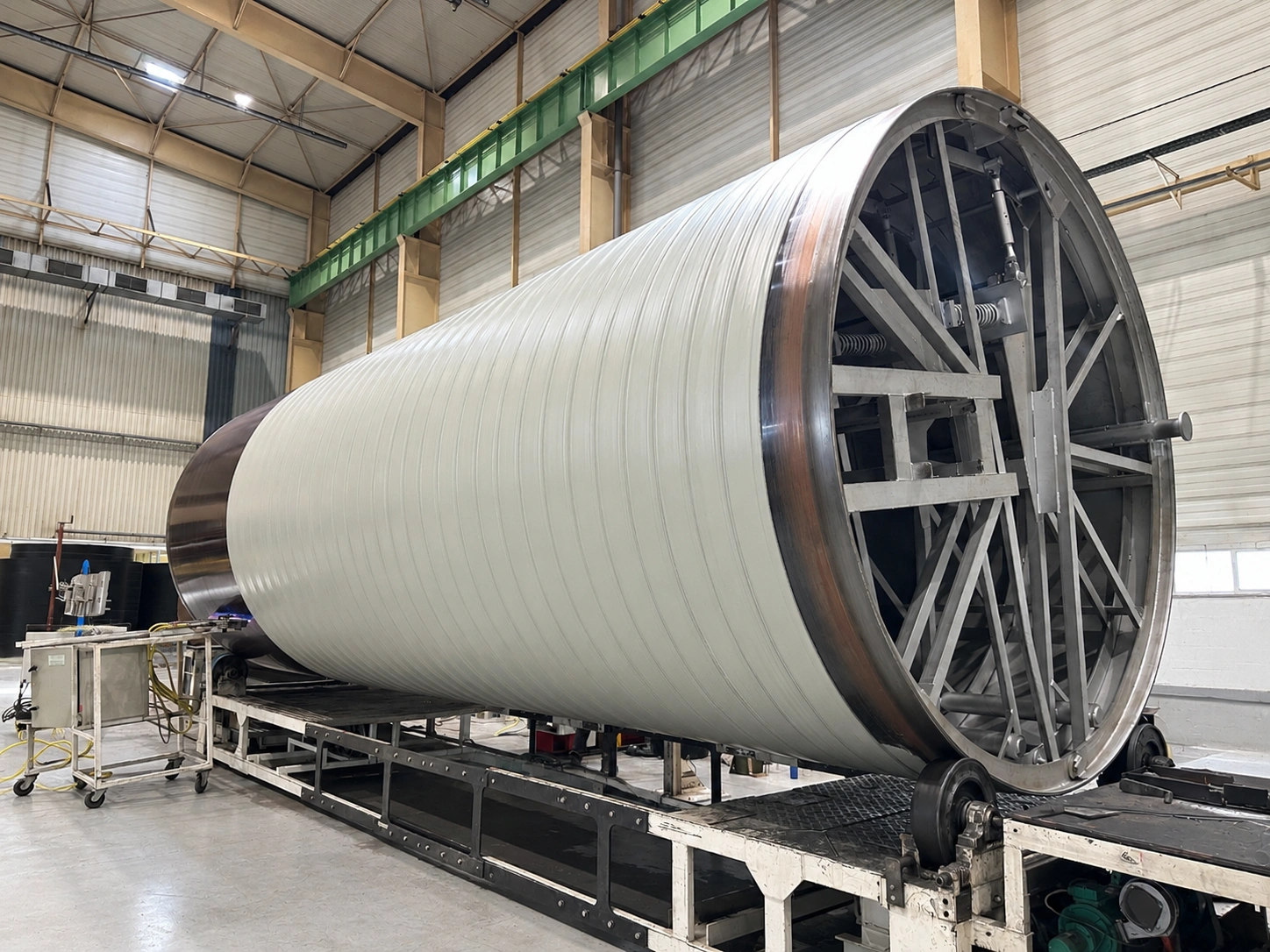
HDPE tank
Concentrated acids and bases, corrosives, effluents. More economical. Typical range −45 °C to +60 °C. See vertical HDPE tanks.
Vertical
Polypropylene PP / PPH — not HDPE. For hotter processes, food-grade liquids and potable water.
A vertical PP / PPH (polypropylene) tank is not an HDPE tank. Both are thermoplastics, but they do not serve the same fluids or the same temperatures. PP is chosen when heat, food contact or potable water rule out polyethylene.
HDPE remains the reference for concentrated acids and bases, up to about +60 °C, at a tighter cost. PP takes over when the process exceeds that range — typically up to +90 °C depending on the fluid — or when the duty is food-grade or potable water.
EELIX sizes each PP tank to the fluid, temperature, density and site: single skin, jacket or integral bund, mainly in fusion-welded sheet, or by winding after a specific study for large volumes.
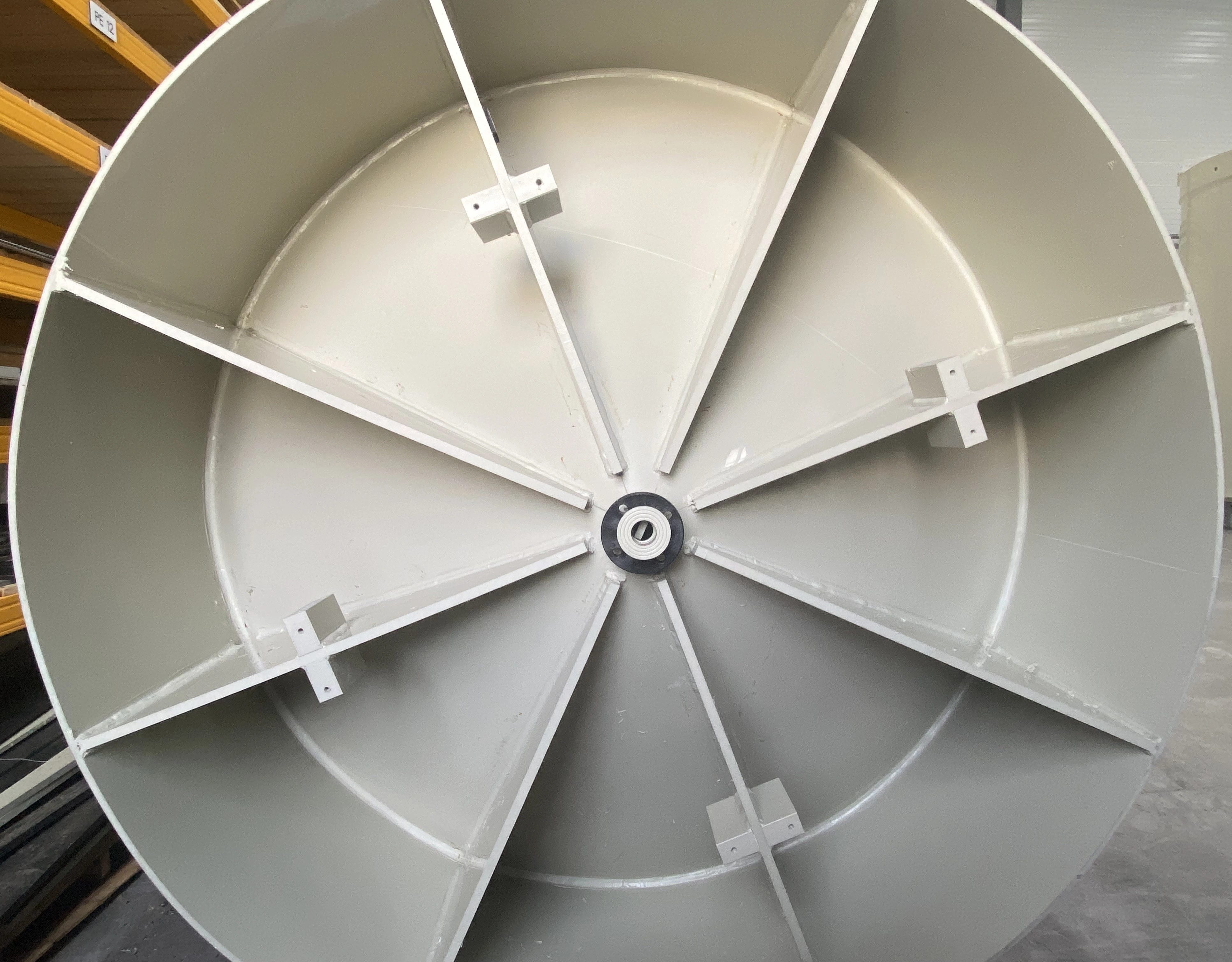
HDPE (high-density polyethylene) and PP (polypropylene) are not interchangeable. A fluid that suits HDPE may be incompatible with PP, and the reverse is common as soon as temperature or food contact matters.
Concentrated acids and bases, corrosives, effluents. More economical. Typical range −45 °C to +60 °C. See vertical HDPE tanks.
Hotter liquids, food duty, potable water, some solvents. Better thermal resistance, up to about +90 °C. It is not “high-temperature HDPE”.
Engineering validates the material on the actual fluid — concentration, temperature, service life. HDPE sizes and compatibility tables are not copied across to PP.
Polypropylene is selected for heat resistance and a clean surface, not as a generic stand-in for HDPE. Smooth walls clean easily, which matters for food and potable water.
Vertical PP tanks mainly serve processes where temperature or food contact rules out HDPE.
Food-grade liquids, pastes, process water, canned products
Water storage, clean processes, municipal sites
Fluids too hot for HDPE, dilute bases, solvents after testing
Liquid medicines, skin-care, temperature-controlled processes
Hot water, wash water, circuit fluids
EELIX PP tanks are mainly made by fusion-welded sheet fabrication: cutting, bending, polyfusion. The process suits polypropylene. It covers specific geometries, small and medium volumes, and a smooth surface that is easy to clean.
Extrusion-winding, the Schoeller-Allibert process held by EELIX, is first and foremost for large HDPE volumes. A large PP requirement is studied separately — HDPE sizes and series are not reused automatically.
One PP wall. An economical option for food, potable water or a low-hazard fluid, often with an external bund if the product requires it.
Two concentric PP walls. The interstitial space protects against leaks and improves thermal insulation — useful on a hot liquid. Leak detection, drains and levels are planned at the design stage.
One wall. For food, potable or low-hazard fluids, or when containment is a separate bund.
Two PP walls. Integral containment, better insulation on a hot fluid, optional leak detection.
Published HDPE dimension tables do not apply as-is to PP. Each PP tank is calculated on the project fluid, temperature and hydrostatic pressure.