Chemicals
Acids, bases, corrosives, toxic products
Vertical
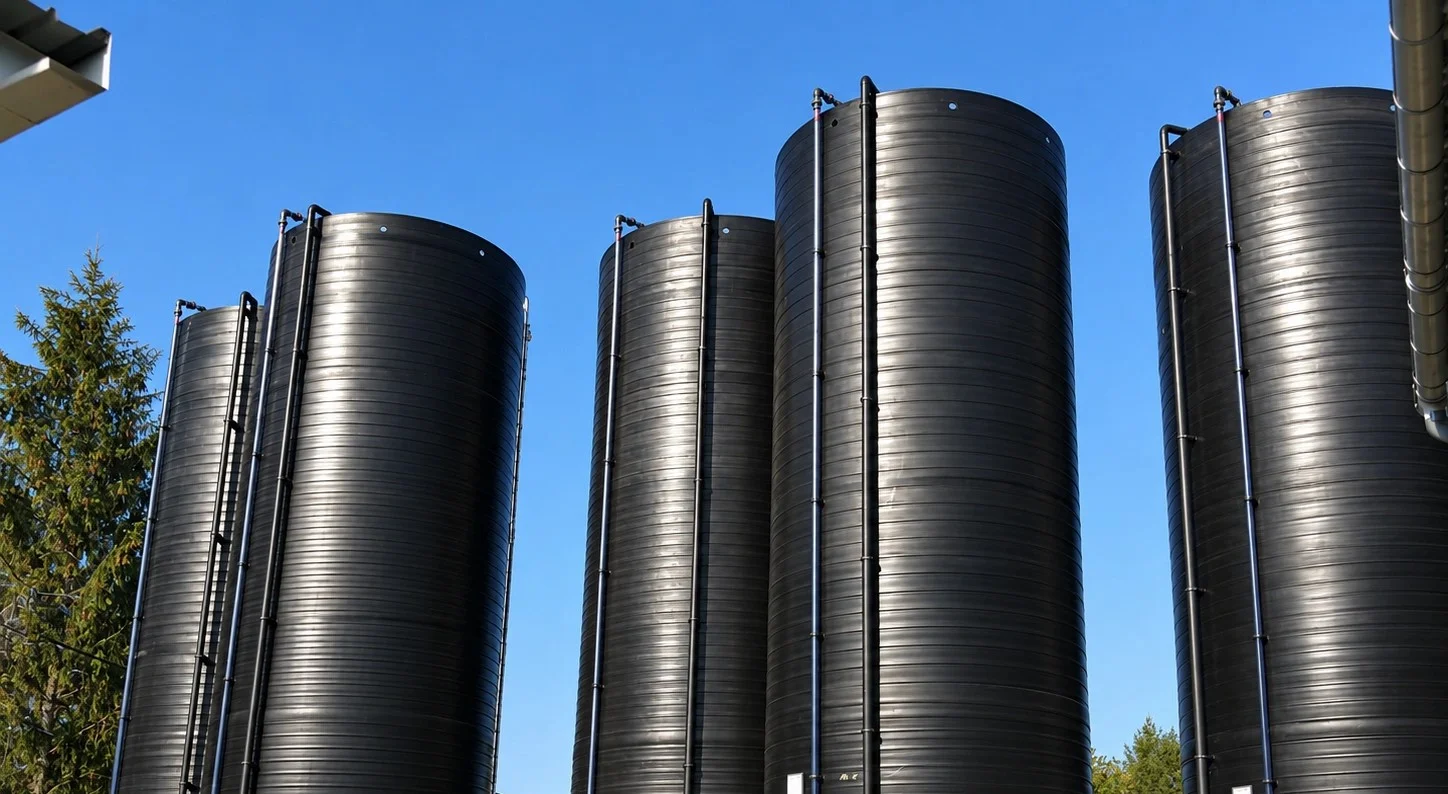
HDPE storage by extrusion-winding: single skin, double skin, jacket or integral bund. Up to 100 m³, EN 12573-2.
Vertical HDPE tanks store acids, bases, effluents and corrosive liquids. The material resists corrosion, works indoors or outdoors, and is sized to the product, the density and the hydrostatic head.
EELIX builds to order: diameter, height, nozzles, manways, ladders and level instruments. A vertical tank uses little floor space for a large working volume.
Installation is planned in the study — base, anchors, connections — so erection stays short. Maintenance stays simple: smooth wall, no paint, no oxidation.
HDPE suits chemicals, process water and compatible liquids. Chemical resistance and service life are checked on the real fluid, not on a generic chart.
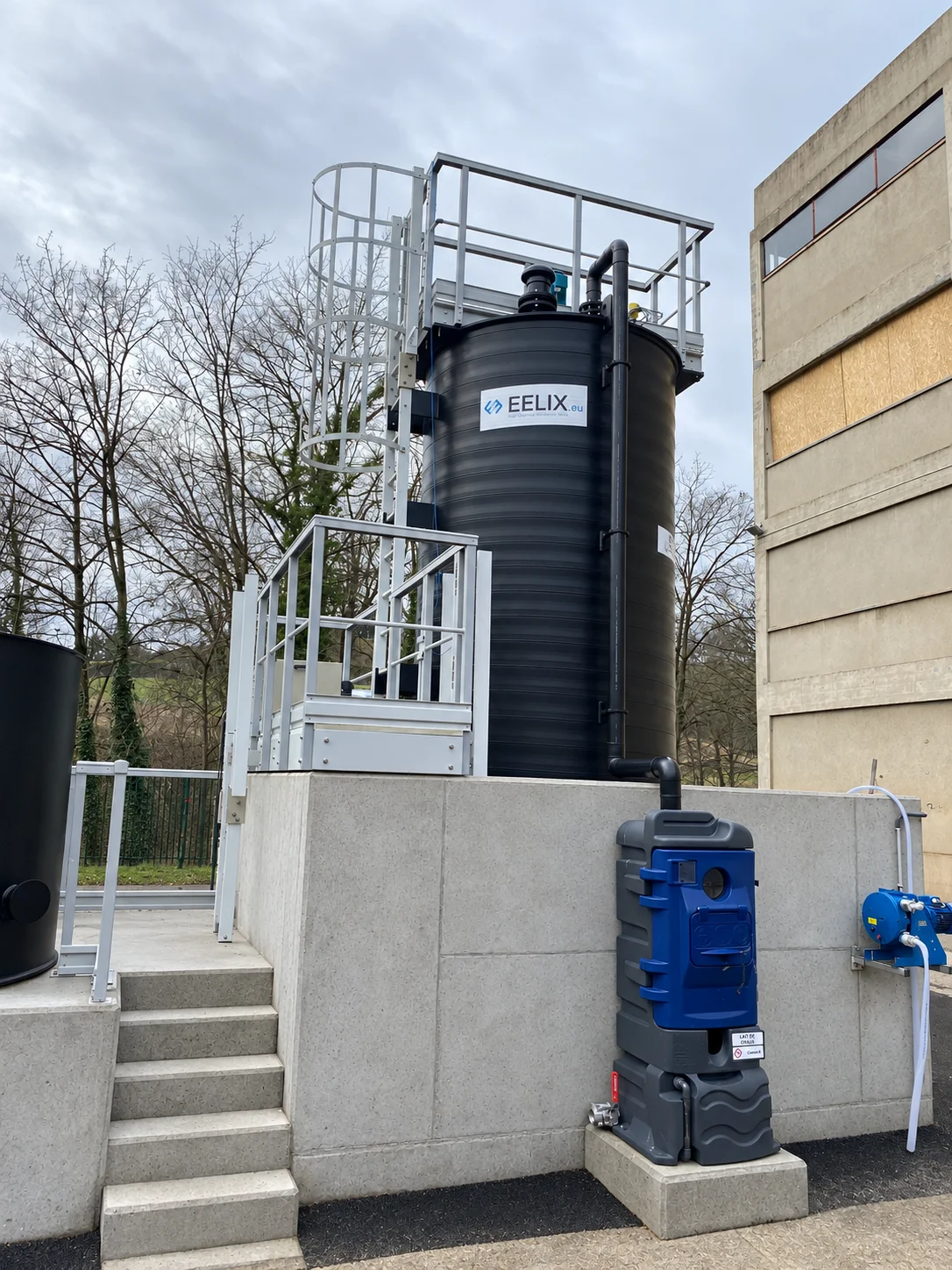
HDPE is the reference material for acids and bases. Polypropylene, for hotter processes or food liquids, is covered separately on the vertical PP tanks page.
Acids, bases, corrosives, toxic products
Reagents, effluents, process water, plants
Baths, detergents, site storage, day tanks
Water, treatment reagents, lubricants where compatible
Only liquids compatible with HDPE, after validation
EELIX holds the Schoeller-Allibert technology. Solid extrusion-winding produces a seamless monobloc tank, up to 100 m³, to EN 12573-2. The process suits corrosives, high densities and tall liquid heads.

A single-wall tank is a cylindrical vessel with one HDPE thickness. It stores liquids in industry and utilities, from small volumes up to several tens of cubic metres.
HDPE is light, easy to handle, and resists the chemicals it is selected for. The tank is economical to build, simple to install and to maintain. For a polluting or hazardous product, a separate bund is still required.

For smaller volumes and special shapes, the tank is built from HDPE plates joined by polyfusion: cutting, rolling, inspected welds. The process keeps HDPE chemical resistance and allows shapes winding does not cover.
The layout follows the site: nozzles, lids, baffles, stiffeners. The wall stands outdoors without a coating to maintain.

The choice follows the hazard of the liquid, the site rules and the space available for an external bund.
One HDPE wall. The economical option when the product does not require secondary containment, or when a bund already stands beside the tank.
Inner wall and outer wall in HDPE. The gap holds a leak from the inner wall and protects the product, people and the environment.
Two concentric walls: the inner skin holds the liquid, the outer skin is the bund. The gap is monitored — leak detection, sight glass, level. The tank takes the footprint of a single unit, without a concrete pit around it.
When choosing, look at capacity, chemical compatibility, build quality and maintenance. Chemical and water-treatment projects most often come back to this layout as soon as the liquid is polluting.
Double-wall builds are detailed on the HDPE double-wall tanks page.
Request a quote